For many individuals recovering from injury, surgery, or living with chronic mobility challenges, home mobility equipment can represent a major step toward independence. Whether you’re looking at a walker, rollator, power wheelchair, or scooter, making informed decisions ensures you get the right device for your needs. In this blog post, we’ll walk through what to consider — and highlight how Stat All Medical & Supply can help guide you.
Types of Mobility Equipment:
Walkers & rollators: Standard walkers provide stability when standing or walking short distances. Rollators add wheels and usually a seat—ideal for individuals who can walk but may tire easily.
Manual wheelchairs: These are self-propelled by the user (or pushed by a caregiver) and come in standard or lightweight models.
Power wheelchairs: For users needing more support or unable to propel a manual chair effectively. These include joystick controls, varying speed settings, and larger batteries.
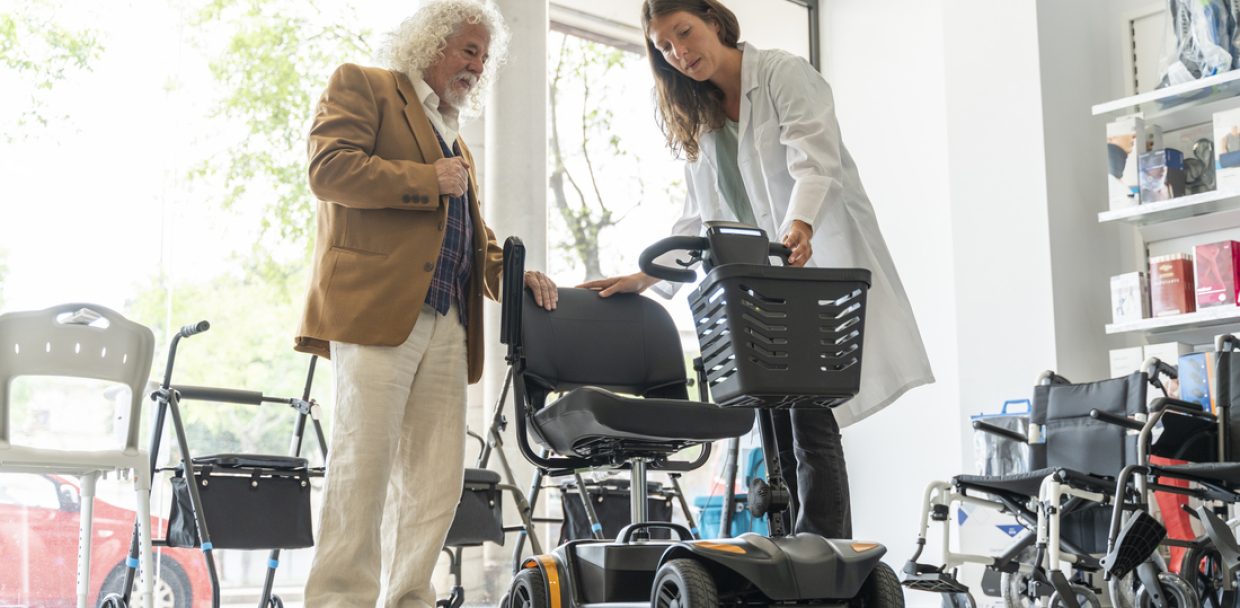
Mobility scooters: Usually three- or four-wheeled, scooters are ideal for longer-distance mobility, especially outdoors. They’re often more comfortable for extended use.
Lift chairs / stair lifts (though not always under “mobility equipment” per se) also support independence. Ask your provider if they carry or service these.
Key factors to Evaluate:
Height, weight, and user ability: Equipment must match your height (for comfort & safety), weight (to ensure support), and ability (can you operate the controls?).
Home environment & terrain: If your home has narrow doorways, thresholds, carpets, rugs, or uneven surfaces, that will influence what mobility device will work. Outdoor terrain (driveways, sidewalks, slopes) also matters.
Battery life & charging (for power devices): Power chairs and scooters require adequate battery capacity and accessible charging. Local providers like Stat All Medical can inform you about local servicing and accessible charging options.
Daily usage patterns: Will you use the device just indoors, outdoors, for errands, for travel? The intended usage influences features like turning radius, suspension, portability, etc.
Maintenance and repair access: Ensure the equipment has local servicing. A long wait for a repair can significantly impact your mobility.
Rental vs. purchase decision: If your need is temporary (e.g., post-surgery recovery) then rental may save money. If long term, purchase may be more cost-effective—plus you may customise accessories.
Insurance & reimbursement: Many insurance plans and Medicare have specific criteria for DME coverage. Local providers often assist with documentation and billing. At Stat All Medical, the staff understand these local/regional processes given their 30+ years of service.
How Stat All Medical supports your decision
- They offer a large variety of equipment for rent or purchase.
- They’ve been serving the Kingman area for 34 years—meaning familiarity with regional needs, terrain and user scenarios.
- Local presence means quicker turnaround for repairs, replacements or accessories.
- Staff can walk you through features, help you test equipment in-store (or in your home environment if that’s an option) and explain pros/cons of models.
- If you’re recovering from surgery and only need a device temporarily, they can guide you toward a rental instead of a full purchase.
Practical checklist before you commit
- Measure your spaces: door widths, hallway turns, carpet transitions.
- Sit in the device (if possible) and test controls/buttons.
- Ask about battery life, warranty/service coverage.
- Get a demonstration of how to fold, transport, store the device (if needed).
- Understand what accessories are available (cushions, armrest bags, weather covers).
- Ask about delivery, setup, and what happens if there is a malfunction.
- Clarify rental terms (duration, return fees, what constitutes damage).
- If purchasing: ask about local servicing, where to buy parts, and estimated maintenance schedule.
Conclusion
Selecting the right mobility equipment is more than just picking a model—it’s about matching the device to your body, your home, your lifestyle and how long you’ll use it. By engaging with a knowledgeable local partner such as Stat All Medical & Supply, you gain access to experienced staff, local servicing and a tailored fit for your daily life. If you’re preparing for mobility equipment—whether short-term recovery or long-term solution—reach out, ask questions, and invest in a device that helps you move with confidence and dignity.